
MRT's Complete Range of Services
- Design Design
- Tooling Tooling
- Pressure Pressure
- Gravity Gravity
- Sand Sand
- Machining Machining
- Finishing Surface
- Assembly Assembly
- Logistics Logistics
Casting
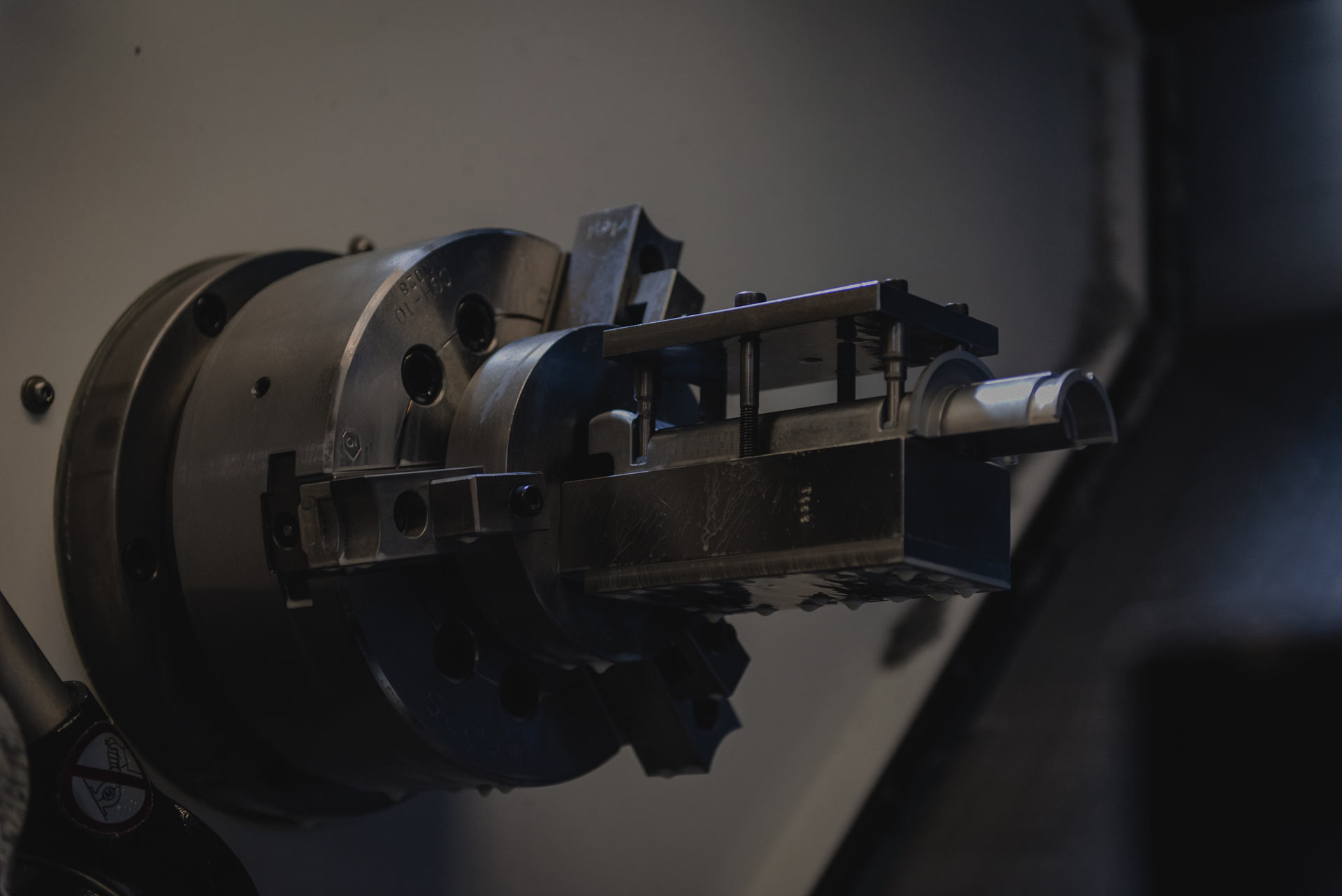
Tooling decisions made before any steel is cut will decide what follows: the tolerances you can hold, the cost of each part and how quickly you reach first-off samples. This page answers the questions we get asked most when customers are specifying tooling for a new die casting – from tool steel and heat treatment to cavities, slides and cores, flow simulation, lead times and cost.
If your question is not covered here, our team would be glad to offer further technical advice.
Tool steels have to undergo a lot. Cycling through metal temperatures up to 700 °C every 40 seconds requires top quality steel. MRT Castings typically uses superior quality ESR H13 steel which features high temperature strength, excellent toughness and ductility, and resistance to thermal shock.
Heat-treatment of superior steel is just as important. The typical range is 42-48 HRC depending on the H13 used and the tool requirements. Typically, the process is to anneal, harden at approximately 1,000 °C, quench and temper. Stress relief after finishing is recommended if the tool has been spark-eroded. Surface coatings such as nitriding can be applied to allow for certain requirements to help increase die life. These materials and processes are always purchased from certified suppliers.
There are International Standards for the general dimensional and geometrical tolerances that can be achieved for diecast parts: ISO 8062-3 and ISO 8062-4. However, every design is different. Features such as wall thickness, part size and the position of the parting line can allow tighter tolerances or require wider ones. Our casting process is extremely consistent so a tool can be adjusted to achieve more exact tolerances than standards advise. Effective design for manufacture – and advising us of your key requirements – enable us to achieve precise tolerances.
While MRT does have an in-house toolroom, this is mostly used for modifications and maintenance of dies. For new tooling, we work with specialist partners in the UK and Italy. These partnerships have been developed over decades of shared experience. We work closely with these toolmaking partners on the design of the tools and project manage them throughout the manufacturing process. We oversee sampling, either at our toolmakers’ own trialling facilities or on-site at MRT.
The number of cavities to include in the tool will depend on:
More cavities will increase the cost and size of the tool but will usually reduce the component cost as multiple parts can be produced simultaneously.
If the geometry of the component has features that cannot be formed in the line of draw of an open and close tool, then slides and cores may be required. These will increase the cost and complexity of the tool but will help in achieving a near-net shape. This will usually reduce the cost of subsequent machining operations, which would have been the alternative method of creating these features on the part.
We run the industry-leading MAGMASOFT® simulation package to support us in predicting filling and the solidification of the component. This helps to:
If forecast volume demand is high, then it may be appropriate to make multiple cavities of the same part in a tool, thereby reducing unit costs for only a modest increase in tooling price. If several similar components are required together in an assembly, then the most economic approach may be to produce a family tool (such as a pair of mating parts together in one tool) rather than producing two separate dies. The cost-benefit analysis of this choice will depend on the predicted volumes, the tooling budget and the similarity of the geometry of the family parts.
This depends on the complexity and scale of the project but it is generally 12 to 14 weeks for standard gravity diecasting tools and around 16 weeks for high pressure die casting.
We will add venting to the tool design to release trapped air from the cavity. Where the tool geometry allows, we will aim to add cooling to regulate the temperature of the die, and locally cool any predicted hotspots.
Standard shrinkage allowances are added to the tool to ensure that the die is sufficiently oversized to produce a component (after shrinkage) that conforms to the dimensional requirements of the casting.
The cost of the tooling will include:
As with all manufacturing, fluctuations in global material and energy costs will impact tooling prices. But the main issue influencing the cost will be the scale and complexity of the specification.
Tooling cost explained
Where the money goes
Every tool is quoted individually, but the cost always breaks down into the same four elements.
How complexity builds up the tool
Tooling design and project management
Designing the tool around your part and managing the project with our toolmaking partners, from first drawings through to approved samples.
Tool steel and manufactured components
The tool steel itself, plus any other manufactured components the tool needs, such as hydraulic cylinders.
Tool manufacture Largest cost
Skilled toolmaking labour and time on specialist machinery. This is the largest element of the cost.
Trialling and sampling
Running the finished tool and producing samples to confirm it delivers parts to specification before production begins.
What drives the cost up or down
Main driver
Scale
A larger part needs a larger tool, which means more steel and more machining time.
Main driver
Complexity
Slides, cores, additional cavities and intricate features all add design and toolmaking hours.
Market factor
Material & energy
As with all manufacturing, fluctuations in global material and energy costs affect tooling prices.
Relative only. Every tool is quoted on its own specification.
While it is possible to produce ‘soft tools’ for diecasting initial low quantities, they are only very slightly cheaper than producing the final tool, and the lead times are almost as long. Advances in simulation technology have increased the confidence in proving tool designs before cutting steel, so that aspect of prototyping requirement has diminished. Where prototype parts are required quickly, these can usually be machined from solid, to match the design of the final casting.
Around
80
years of casting
We know where problems tend to start and how to deal with them before they reach your production line. If you are qualifying a foundry for a demanding part, we would be glad to review your drawing and explain how we would approach the tooling and the casting.
What to include in your enquiry
To enable us to provide design feedback and budget costs, please share:


MRT will manage the complete process, from tooling design, all the way through manufacture, to production of samples, and submission of First Article Inspection reports.
All toolmaking is managed within our ISO9001 quality management system. Our toolmaking partners are regularly auditted. Accuracy of tooling is verified by extensive dimensional checks on first-off samples.
Our in-house engineering resources and skills ensure that we can maintain production tooling to the highest standards.
We are meticulous in our approach to tooling design, and incorporate numerous innovative features to improve product repeatability, improve tooling life and minimise production set up time.

Find out more information about MRT Castings and get a taste of our facilities.
Check out our virtual tour and find out how we can work with you on your next project.
I want...
20th Nov 2026
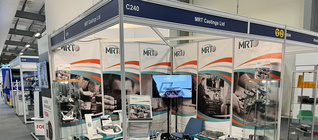
MRT Castings will once again be exhibiting at Southern Manufacturing & Electronics. Come and see us on Stand C240.
Read More
Manufacturers’ organisation Make UK has named our Managing Director Phil Rawnson in its 130 Honours list.
Read More16th Apr 2026
At MRT, we’ve always prioritised the adoption and application of new technology.
Read MoreMRT Castings Limited
South Way
Walworth Business Park
Andover, Hampshire
SP10 5JT, United Kingdom
T: +44 (0)1264 324021

© MRT Castings Limited 2026 | Registered in England - No. 3150165 | VAT No. GB 199 1318 33
 Powered by