
Why UK OEMs Are Reshoring Precision Die Casting
For more than two decades, many manufacturers transferred aluminium die casting production overseas in pursuit of lower costs. China became the dominant destination, supported by significant investment in foundry capacity, tooling and manufacturing infrastructure.
India also emerged as a major supplier, particularly for automotive and industrial components, while countries in Central and Eastern Europe – including Poland, Czechia, Slovakia and Romania – developed strong reputations for supplying European OEMs. Turkey, Vietnam and Mexico have also become important manufacturing centres for certain markets.
For many products – particularly high-volume commodity components – offshoring has delivered commercial benefits. However, manufacturers producing complex, precision die castings for aerospace, medical devices, scientific instrumentation, defence and other high-specification industries have increasingly discovered that the lowest piece price does not necessarily represent the lowest total manufacturing cost.
As tolerances become tighter, quality expectations increase and supply chains face greater disruption, many OEMs are now reassessing where their castings are manufactured.
Get expert advice on reshoring your die casting
Offshoring: Where Things Go Wrong Technically
Porosity and Casting Integrity. High pressure die casting is inherently prone to gas and shrinkage porosity. Controlling it depends on process parameters that most high-volume foundries have tuned for less demanding applications – not for parts that need to survive fatigue loading or pass a leak test. You’ll know the issue if you’ve had castings arrive with porosity concentrated exactly where the machinist then breaks through into a critical wall section. This is something that should have been caught by die design and gating changes, or by rigorous inspection, long before the part shipped.
Alloy certification and traceability. Aerospace and medical work needs full material certification back to the ingot, often with specific alloy chemistry tolerances tighter than the standard commercial specification. Some offshore suppliers work to their own internal ‘equivalent’ grade and treat certificates as paperwork to be generated rather than a genuine chain of custody. If batches produced abroad fail final inspection, you need to trace the issue back to a specific melt and die cycle – and not just get told it’s “the same material, basically”.
Dimensional stability and tool wear. Die casting tools wear, and how a foundry manages that wear against tolerance drift matters enormously on precision work. You may have seen dimensional creep in an offshore supplier’s production run. It wasn’t picked up because in-process SPC either wasn’t being run properly – or it was being run to loosened limits to keep yield numbers looking good for the customer.
Secondary machining and finishing. Many overseas foundries subcontract machining, heat treatment and surface finishing to nearby third parties, adding handling steps and inspection gaps. It’s harder to identify the root cause of a dimensional problem that surfaces after machining when three separate companies have touched the part and none of them has full visibility of the others’ processes.
Communication and design for manufacture. This is the one that costs the most in the long run. A UK precision foundry engineer reviewing your drawing will flag a draft angle, wall thickness transition or gate location that’s going to cause you grief, before you cut metal. That conversation – in the same time zone, in the same technical language, with someone who understands your end application – rarely happens the same way through an agent, a broken video call and a six-hour time difference. Design changes that would take a phone call and a day in the UK can take weeks offshore…by which point you’ve built and shipped parts against the wrong revision.
Lead time and logistics risk. Six-to-10 weeks of sea freight, port congestion, customs delays and minimum order quantities that don’t suit low-volume aerospace or medical programmes all add real risk to your supply chain. A single container delay can create serious issues. None of that shows up in the piece price comparison that got the job offshored in the first place.
IP protection. Tooling, drawings and process know-how sitting with an overseas supplier outside a well-enforced legal framework is a genuine and often underestimated risk for anything with real design value.
Get expert advice on reshoring your die casting
What An Experienced UK Specialist Supplier Can Offer Instead
A UK foundry like MRT Castings with real aerospace and medical device experience brings benefits that are hard to replicate cheaply overseas – such as proper accreditation with an audit trail that stands up to proper customer or regulatory scrutiny:
- Queen’s Award for Enterprise (International Trade)
- ISO 14001 (environmental management)
- ISO 45001 (health and safety management)
- ISO 9001 (quality management system)
- Cast Metals Federation member
- Cyber Essentials Plus
- Make UK member.
Our expert engineers offer valuable design-for-manufacture input at the quoting stage. They understand why a wall section or a gate position matters for your application – not just how to fill a die.
Get full material and process traceability – batch to batch – with metallurgical and NDT capability in-house or through a properly controlled local subcontractor. We have the agility to run low-to-mid volume batches economically, make an engineering change in days rather than months, and pick up the phone when something needs sorting.
There’s also something less tangible but just as valuable – you’ll be dealing with a supplier who treats your business as a long-term relationship rather than a transaction, and who will still be there in years to come.
Recommendations If You’re Looking To Reshore Die Casting
Start with a proper root cause review of what’s actually gone wrong with your current offshore supply – porosity, dimensional drift, lead time, IP concerns, whatever it is – so you know what you’re solving for rather than just chasing a different price point.
Write a tight technical specification rather than relying on a drawing alone. Include material certification requirements, inspection and NDT requirements, and acceptable process routes for any secondary operations.
You need evidence, not assurances – so ask us about case studies in comparable sectors, sight of our quality management system. Ideally, come and see our die shop, casting cells and inspection facilities for yourself.
Run a trial batch and full first article inspection before committing volume. Treat this as a proper technical transfer, with tooling condition assessed, process parameters agreed and documented, and a clear sign-off before production ramps up.
Reshoring isn’t always the cheapest option on paper. But for precision die casting where failure has real consequences, and where design changes, traceability and lead time matter as much as unit cost, an experienced UK supplier who understands your application properly is very often the cheaper option once you look at the whole picture.
Get expert advice on reshoring your die casting
Selecting the Right UK Die Casting Partner
Reshoring should not simply involve transferring production from one supplier to another.
The first step should be a comprehensive technical review of the existing component. Assess the casting design, manufacturing history, tooling condition, dimensional capability and current quality performance.
Don’t assume that existing tooling may be suitable for transfer, refurbishment or modification. In many cases, investment in new tooling delivers improved casting quality, shorter cycle times and greater long-term process capability.
A structured production transfer should include design for manufacture reviews, First Article Inspection (FAI), process validation, capability studies, dimensional reporting and controlled production ramp-up before full-scale manufacture begins.
When selecting a UK supplier, you should look beyond production capacity alone. A strong specialist partner like MRT Castings combines deep foundry expertise with practical engineering knowledge. We can demonstrate proven experience of manufacturing complex aluminium castings for demanding industries – supported by recognised quality management systems, comprehensive inspection capability, modern CNC machining facilities and a culture of continuous improvement.
Perhaps most importantly, we’re willing to work as an extension of your engineering team, offering technical advice during product development rather than simply manufacturing to drawing.
The Value of Experience
Precision die casting has never been solely about producing metal components at the lowest possible cost. It is about delivering consistent dimensional accuracy, reliable mechanical performance and repeatable manufacturing processes over many years of production.
As engineering tolerances become tighter and supply chain resilience becomes increasingly important, more OEMs are recognising that manufacturing expertise, process capability and engineering support deliver far greater long-term value than the lowest initial quotation.
For organisations producing high-performance components, reshoring production to an experienced UK die casting specialist like MRT Castings is an investment in quality, consistency and manufacturing confidence.
I WANT TO DISCUSS... RESHORING PRODUCTION TO THE UK FROM OVERSEAS
Please fill in your details below and we will contact you as soon as possible to discuss your requirements.
HOW can MRT Castings help you?
I want...
- Select what you need
- a complete solution
- to develop a new component from initial concept
- advice on what processes are best suited to my component
- prototypes before committing to production tooling
- to re-shore production to the UK from overseas
- a new supplier to use existing tooling
- to convert a machined from solid part to a casting
- a supplier who can meet stringent quality requirements
New at MRT Blogs
Digital Transformation at MRT Castings
16th Apr 2026
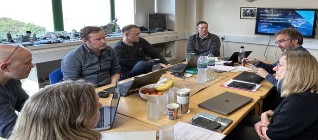
At MRT, we’ve always prioritised the adoption and application of new technology.
Read More
A sincere thank you to everyone who visited MRT’s stand at Southern Manufacturing & Electronics 2026 at Farnborough International in February.
Read MoreLooking Ahead to 2026 at MRT Castings
19th Jan 2026
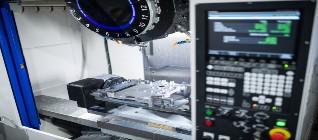
As we begin the new year, it’s a great opportunity to reflect on the progress made at MRT over the past 12 months.
Read More