
MRT's Complete Range of Services
- Design Design
- Tooling Tooling
- Pressure Pressure
- Gravity Gravity
- Sand Sand
- Machining Machining
- Surface Finishing
- Assembly Assembly
- Logistics Logistics
Casting
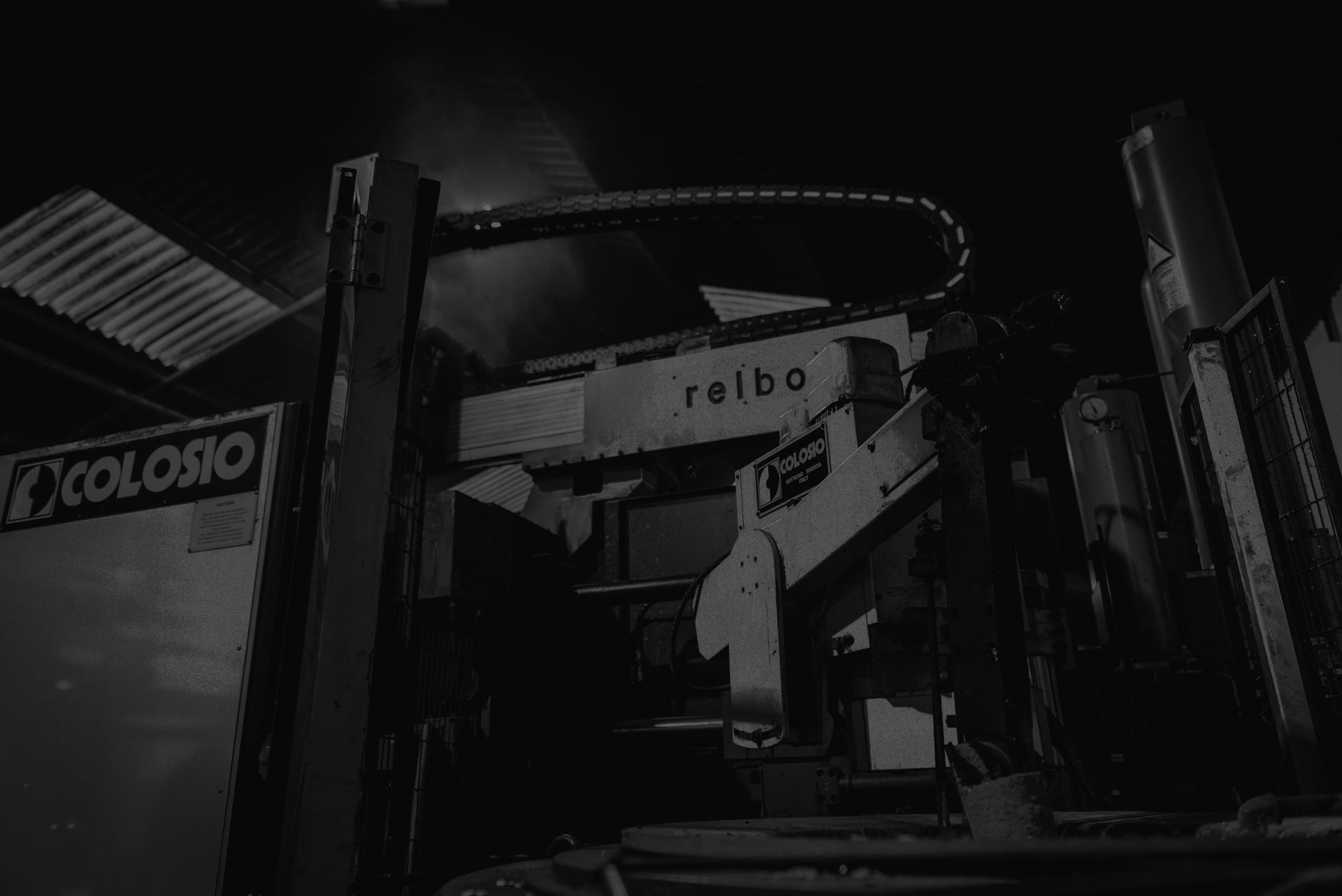
High pressure die casting specialists
When you specify high pressure die casting for a part that has to perform in a high performance vehicle or a medical device, the casting is only part of what you are buying. You are relying on the tool that shapes it, the process window that repeats it and the people who will catch a problem before it reaches your assembly line.
Contact our specialist engineersThis page sets out what we think you should expect, and how we meet that for sectors including aerospace, defence, medical, automotive, marine and rail. We are very experienced in working to compressed development lead times, and our use of simulation and prototyping can accelerate challenging tooling development and sampling timelines.


Most porosity, distortion and dimensional drift is designed into or out of the tool. Gate position, runner balance, overflows, venting and die temperature determine where defects form and how stable the part stays across a run. Engineers want to see that fill and solidification were simulated before steel was cut, and that the results changed the tool rather than being filed away.
Where a part justifies it, we run filling and solidification simulation in MAGMASOFT® and review the results with your design team at the earliest stage. At that point, moving a gate or adjusting a wall section costs a conversation instead of a tool modification. We will also tell you early if the geometry works against the process.
High pressure die casting suits walls of roughly 1 mm to 2.5mm; it needs adequate draft, even sections and no undercuts or isolated heavy masses. These rules are cost-effective to follow on the drawing or 3D model and expensive to fix in the die.
The most cost-effective time to improve a casting is before the tool exists. Design for manufacture is where we compare your drawing with what the process can reliably hold. We look at draft, wall thickness, section changes, parting line position, feature access and more. A small change to a rib, radius or datum at this stage often removes the need for a tool modification later, and it usually makes the casting easier to inspect as well.

Select a point on the tool, or a feature from the list, to see what it controls. Simplified cross-section.
Where molten metal enters the cavity. Its position and size set the fill pattern, which decides where turbulence and trapped air are most likely to form.
Carries metal from the shot sleeve to the gate. A balanced runner delivers metal at the right speed and pressure, so no part of the cavity is starved while another overfills.
Small pockets at the end of fill. They catch the first, coolest metal and the oxides it carries, so that material ends up outside the part rather than inside it.
Narrow channels that let air escape as metal fills the cavity. Where venting is poor, gas stays in the casting as porosity.
Cooling channels hold the die at the right temperature. Too cold risks cold shuts, too hot encourages soldering and distortion, and drift between shots moves the part dimensionally across a run.
New tools are built with a tightly managed group of specialist toolmakers in the UK and Europe but the responsibility stays with us. We take full responsibility for tool design, project management and sampling – and your tooling is 100% owned by you. Every tool is fully sampled and submitted with dimensional reports produced in-house on our CNC co-ordinate measuring machines – so the first parts you see are measured parts rather than promises. Our in-house toolroom makes machining fixtures and carries out routine maintenance, repairs and modifications, so a worn insert or an engineering change does not send your tool to a third party and stall your schedule.
Our toolmaking page covers this in more detail.
Read about our toolmakingA good tool still needs a controlled process. We run six die casting cells with locking forces from 220 to 530 tonnes. Every cell has computerised real-time shot control that monitors and adjusts injection, cooling and ejection. Automatic ladling, die spray and casting extraction remove operator variation from the steps that most influence repeatability. Resources also include seven hydraulic trimming presses (5-25 tonnes).
We keep comprehensive set-up records and process data for every tool, so a job running in month 18 is set up as it was at first-off approval. We cast up to 5 kg – in LM2, LM6 and LM24 predominantly – and we will talk through alloy selection against your strength, ductility and finishing requirements.
We source high quality material from UK and European smelters; every delivery is subject to full incoming chemical analysis before it reaches the furnace. Alloy composition affects fluidity, porosity, mechanical properties and finishing response, so confirming it at the start removes a variable that can be difficult to isolate later. For customers who need it, our in-house spectrometer can provide batch-specific analysis – giving your quality team documented evidence of the composition behind the parts you receive.
High quality alloy from UK and European smelters.
Every delivery is analysed before it reaches the furnace.
Documented compositionAutomatic ladling, die spray and extraction remove operator variation.
Injection, cooling and ejection monitored and adjusted every shot.
Process dataComprehensive set-up records and process data kept for every tool.
Set-up recordThe job is set up as it was at first-off approval.
Repeatable partsWhere your quality system requires formal approval, we can meet your First Article Inspection (FAI) and Production Part Approval Process (PPAP) requirements. Tell us at the quotation stage which documentation your programme needs, so we can plan it into the schedule from the start.
Internal porosity is what keeps specifiers awake - and it cannot be judged by eye. In high pressure die casting, the fast injection needed to fill complex geometry can create turbulence, which can trap air and fold oxide films into the casting. Hydrogen pick-up in the melt adds to the problem. Gating and runner design, venting, melt treatment and degassing all matter, and they interact. A higher injection speed that cures a cold shut can raise gas entrapment, and a die temperature change that improves filling can encourage soldering. That is why we look at defects as a system and not one at a time.
Flash, erosion around the gates and surface roughness tell us about die wear and thermal control, so we treat them as early warnings and not just cosmetic issues. For safety-critical components we offer X-ray, dye penetrant and pressure testing, agreed with you against the acceptance criteria on your drawing.
Move each setting to see how curing one defect raises the risk of another. That is why we look at defects as a system and not one at a time.
Injection speed
Cold shuts likely
Cold shut risk rising
Inside the process window
Gas entrapment risk rising
Gas entrapment likely
Die temperature
Incomplete filling likely
Filling risk rising
Inside the process window
Soldering risk rising
Soldering likely
Illustrative only. The shaded zone marks the process window, where both risks are controlled.
Our quality management system is certified to ISO 9001:2015 and independently audited.
Experienced specifiers are wary of a foundry that quotes without questioning the design because it either hasn't looked closely or doesn't expect to be held to the result. They are also wary of suppliers who cannot show process data, who are vague about who owns tool modifications, or who treat low volumes as a nuisance.
We would rather challenge a drawing before we quote than explain a scrapped batch afterwards. We have optimised our set-up and tooling preparation so that batches from 10 to 10,000 are practical, which suits development and low-rate production as well as series work.


We have been casting for around 80 years, and that experience shows in the things that never happen. Castings don't arrive with unexpected porosity, tools don't sit idle waiting for a repair and nobody is surprised by a design change. If you are qualifying a foundry for a demanding part, we would be glad to review your drawing and talk through how we would tool and cast it.
High pressure die casting provides the shortest route from molten metal to completed component, by injecting molten metal into a hardened steel mould and allowing it to solidify under pressure before ejection.
The process allows fast, precise, cost effective production of aluminium die castings, meeting the needs of hi-tech industries where product appearance and dimensional tolerances are critical. MRT have high pressure die casting machines with locking forces of between 220 and 530 tonnes. All feature computerised real-time shot control, automatic ladling, die-spray, automatic casting extraction and cooling.
Small Quantities? No Problem! Many pressure die casting foundries only offer their services for high volume orders, claiming that lengthy set-ups make the process prohibitive to small quantities of aluminium die castings. MRT have optimised their tooling preparation and set-up operations to make the process more accessible to customers who require only small quantities, but whose applications would benefit from the excellent dimensional and cosmetic properties of pressure die casting. So, MRT can provide the complete service, whether you require a batch of 10 or 10,000.
Not sure which method suits your component? Read our guide on the different types of die casting for a full comparison.



Accessibility Controls
The player supports TAB to change the controls.
Update Required<br/>To play the media you will need to either update your browser to a recent version or update your <a href='http://get.adobe.com/flashplayer/' target='_blank'>Flash plugin</a>.
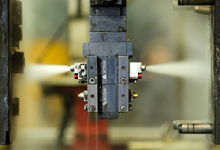
The die is sprayed with a cooling lubricant to regulate temperature and ease casting release.

High quality molten alloy is transferred from the furnace to the shot sleeve by automatic ladle.

Advanced real-time shot control software monitors and adjusts every aspect of the injection, cooling and ejection phases.

The casting is ejected from the tool and inspected. The tool and machine are then ready to repeat the cycle.
Real-time shot control systems, and comprehensive set-up records and quality data ensure consistent production and reduce pressure die casting set-up time.
Quality is achieved by pride in workmanship, backed up by an excellent quality system to ISO9001. For critical components, MRT can provide X-ray, dye penetrant and pressure testing.
Routine tool maintenance, breakdowns and modifications can all be undertaken in-house to reduce tool down time.
We can help you optimise designs, eliminating elements which add unnecessary costs. Where required, we can also provide filling and solidification simulations using MAGMASOFT®.

Find out more information about MRT Castings and get a taste of our facilities.
Check out our virtual tour and find out how we can work with you on your next project.
I want...
20th Nov 2026
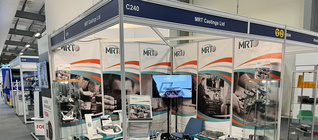
MRT Castings will once again be exhibiting at Southern Manufacturing & Electronics. Come and see us on Stand C240.
Read More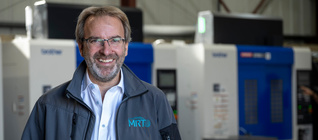
Manufacturers’ organisation Make UK has named our Managing Director Phil Rawnson in its 130 Honours list.
Read More16th Apr 2026

At MRT, we’ve always prioritised the adoption and application of new technology.
Read MoreMRT Castings Limited
South Way
Walworth Business Park
Andover, Hampshire
SP10 5JT, United Kingdom
T: +44 (0)1264 324021






© MRT Castings Limited 2026 | Registered in England - No. 3150165 | VAT No. GB 199 1318 33
 Powered by