
Design Advice Design
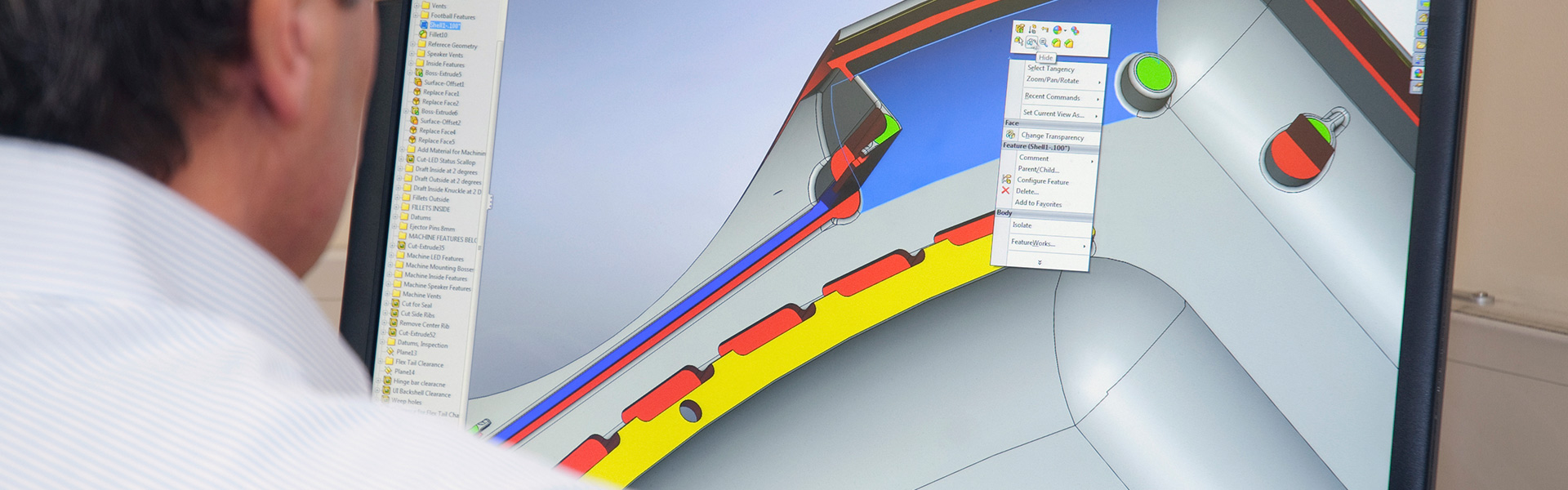
Potential and existing customers often ask, "Which material should be used for this component?", "Can we anodise this alloy?", "What tolerance can reasonably be achieved on these dimensions?". We have attempted to collate the answers to these and many other questions.
The contents of this site are for guidance. If, for example, a particular dimension requires to be held within a closer tolerance than recommended here, it can often be achieved. When the initial questions have been answered and further information is required, we will be pleased to pass on the benefit of our experience to enable best advantage to be made of the processes we offer.
Please feel free at any point to contact our technical sales team for further advice. We also offer a free booklet, "Notes for Designers of Non-Ferrous Castings", which covers all of the topics discussed in this site in further depth.
Need Some Extra Guidance?
If you need more information before you make any decisions, why not view our useful guide From Idea To Product, which covers the entire process of getting your idea manufactured.
Selecting the Best Casting Method for Your Component
In order to select the most appropriate alloy in which to cast a component, designers should first select the most appropriate casting method. This decision is usually based on the anticipated production volumes of the component. It can also be influenced by considerations of the required dimensional accuracy and surface finish. It is often necessary to obtain quotations for more than one process in order to decide which will be the most economic.
Machining Considerations
When machining castings, it is always advisable to discuss with the foundry the method of machining and the locations to be used as datums for each operation.
Surface Finishing
There are a variety of mechanical finishing processes which can enhance the aesthetic quality of castings. These processes can be used as a pre-treatment.
Notes for Designers of Non-Ferrous Castings
DOWNLOAD NOW Guides

HOW can MRT Castings help you?
I want...
- Select what you need
- a complete solution
- to develop a new component from initial concept
- advice on what processes are best suited to my component
- prototypes before committing to production tooling
- to re-shore production to the UK from overseas
- a new supplier to use existing tooling
- to convert a machined from solid part to a casting
- a supplier who can meet stringent quality requirements
New at MRT Blogs
Visit us at stand C240 on the 6th, 7th & 8th of February 2024.
Read MoreMRT Secure Cyber Essential Plus Standard
17th Jul 2023
MRT Castings is proud to announce that it has achieved certification to the ‘Cyber Essentials Plus’ standard.
Read MoreMRT Castings Wins Queen's Award
21st Apr 2022
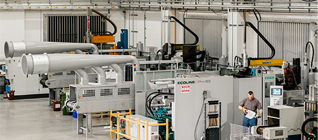
Leading UK aluminium die casting foundry, MRT Castings Ltd, have been honoured with a Queen’s Award for Enterprise.
Read More